
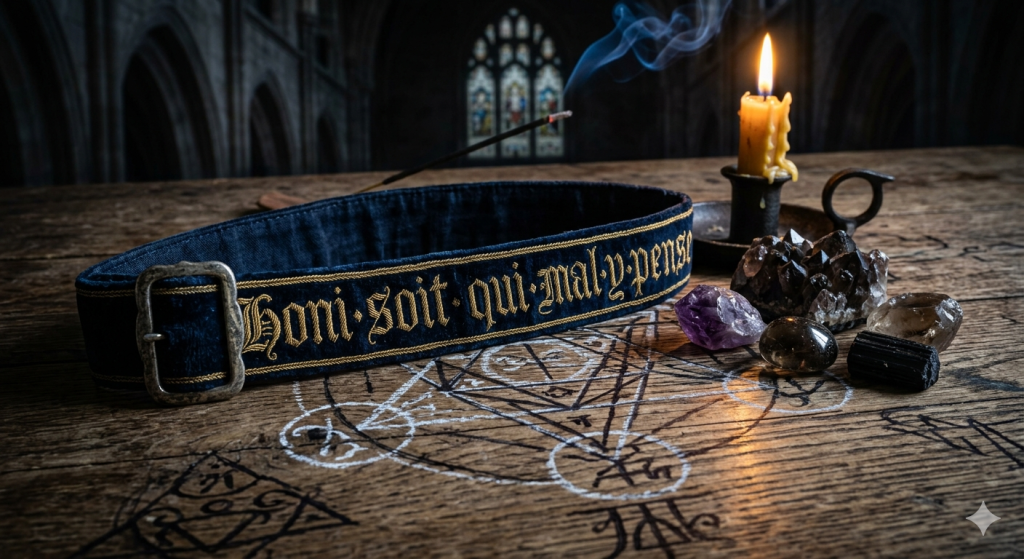
The Binding of the Garter: A Midnight Covenant
On this humid spring eve in the year of our Lord 1348, the air in Windsor is thick with more than just the scent of blooming hawthorn. Within the stone walls of St. George’s Chapel, a new circle has been drawn—one forged in velvet, gold, and an unbreakable, shadowed pact.
King Edward III has reached into the ether of ancient chivalry to pull forth the Order of the Garter.
The Ritual of the Velvet Band
History books will tell you this began with a dropped accessory at a royal ball, a moment of courtly grace turned into a noble institution. But those of us who listen to the whispers of the stones know better. This was no mere fashion mishap. It was a binding.
When the King bestowed that blue velvet garter upon his knights, he wasn’t just creating a badge of honor; he was tethering them to him and to each other under the watchful gaze of St. George. It is a closed loop—a circle that signifies completion, loyalty, and a promise that transcends the mortal coil.
A Sigil of Power
The motto, Honi soit qui mal y pense—”Shame on him who thinks evil of it”—is more than a defense against gossip. In the language of the arcane, it is a warding spell. It is an invocation to protect the sanctity of the inner circle from the prying eyes of the uninitiated.
By pinning this symbol to the leg, these men are marked. They are now conduits of the Crown’s will, bound by a sigil that hums with the weight of history and the silent, heavy gravity of oath-keeping. Tonight, the stars align over Windsor, and the threads of destiny are knotted tightly in indigo silk.
The Order has been established. The pact is sealed. And those who know the old ways understand: once the circle is closed, it is never truly broken.
Stay mystical, my friends.
Moonzie