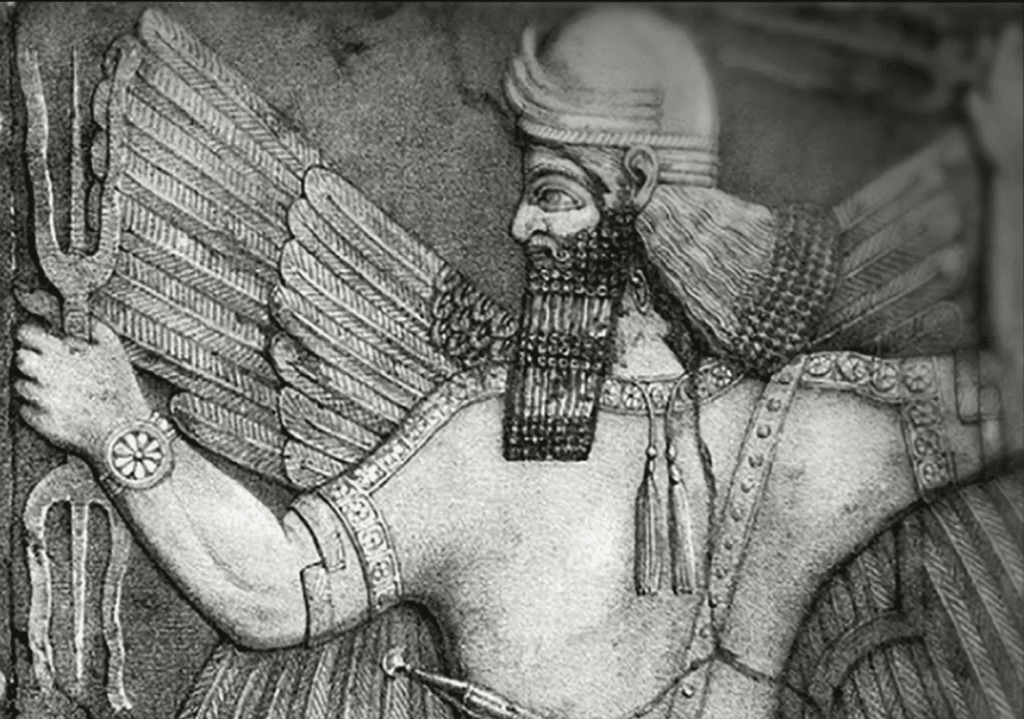
Tammuz
Tammuz, also known as Dumuzid, is an ancient Mesopotamian deity associated with vegetation, fertility, and the annual cycle of growth and decay. The worship of Tammuz was prevalent in Sumer, one of the earliest civilizations in human history, and continued to be venerated in various forms in later cultures of the region, such as Babylonia and Assyria.
Tammuz was considered a shepherd god and was often depicted as a young and handsome man. His mythology revolves around the concept of death and rebirth, closely tied to the seasonal cycle of vegetation. The myth of Tammuz shares similarities with other dying-and-rising gods in different ancient cultures, like Osiris in Egypt and Adonis in Greece.
One of the most well-known myths about Tammuz involves his relationship with the goddess Inanna (Sumerian) or Ishtar (Babylonian), who is associated with love, fertility, and war. In this myth, Tammuz becomes the lover of Inanna/Ishtar, and their union brings prosperity and abundance to the land. However, tragedy befalls Tammuz when he is killed and descends into the Underworld.
In grief over his death, Inanna/Ishtar travels to the Underworld to retrieve him. Her descent into the realm of the dead results in a barren and lifeless world above. Eventually, a deal is struck between the rulers of the Underworld and Inanna/Ishtar, allowing Tammuz to spend part of the year in the Underworld, symbolizing the lifeless winter months, and the other part on Earth, representing the flourishing spring and summer.
This myth served to explain the seasonal changes in nature, with Tammuz’s death and resurrection symbolizing the death and renewal of vegetation throughout the year.
The worship of Tammuz continued to evolve over time and was absorbed into various other cultures, often with different names. The cult of Tammuz also influenced certain aspects of biblical literature, with mentions in the Old Testament, such as in the Book of Ezekiel, where the prophet laments the worship of Tammuz among the Israelites.
Today, Tammuz remains a fascinating figure in the study of ancient mythology, providing insight into the religious beliefs and cultural practices of the early civilizations of Mesopotamia.
If you find this post helpful please consider my Amazon Wishlist, for Cancer Season.