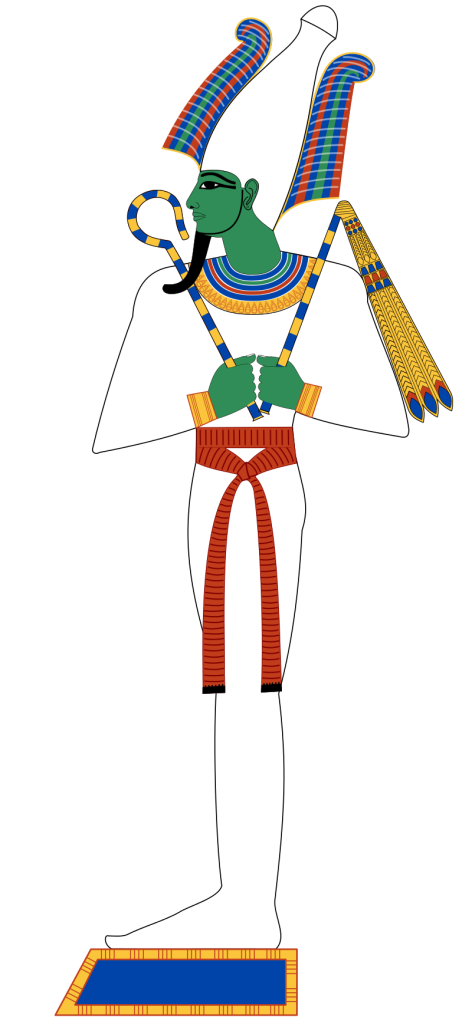
Osiris
Osiris is an important figure in ancient Egyptian mythology. He was one of the most significant gods in their pantheon and played a central role in the Egyptian concept of the afterlife. Here are some key points about Osiris:
1. God of the Afterlife: Osiris was primarily associated with death, resurrection, and the afterlife. He was considered the ruler of the underworld and was responsible for judging the souls of the deceased.
2. Family: According to Egyptian mythology, Osiris was the son of the earth god Geb and the sky goddess Nut. He had a sister and wife named Isis, who was also a prominent deity associated with magic and motherhood. Osiris and Isis had a son named Horus, who later became a significant god in his own right.
3. Murder and Resurrection: The myth of Osiris revolves around his murder and subsequent resurrection. He was killed by his jealous brother Set (also known as Seth), who dismembered Osiris’s body and scattered the pieces across Egypt. Isis, with the help of other deities, managed to collect and reassemble the body, leading to Osiris’s revival as the god of the afterlife.
4. Symbolism: Osiris was often depicted as a mummified figure, symbolizing his role as the god of the dead and resurrection. He is usually shown wearing the Atef crown, which includes ostrich feathers and two tall plumes.
5. Judgment of the Dead: In the afterlife, it was believed that the deceased would stand before Osiris in the Hall of Ma’at, where their hearts would be weighed against the Feather of Ma’at, representing truth and justice. If their heart was lighter than the feather, they would be deemed righteous and allowed to enter the afterlife. However, if their heart was heavy with sin, it would be devoured by a monster known as Ammit, and they would be condemned.
6. Cult and Worship: Osiris had a widespread following in ancient Egypt, and his worship was an integral part of Egyptian religious practices. Temples and festivals were dedicated to him, especially during the Osiris Mysteries, which were significant religious events celebrating his death and resurrection.
7. Influence: The myth of Osiris and his role as a resurrected god greatly influenced Egyptian beliefs concerning the afterlife and shaped their burial practices, including mummification and the construction of elaborate tombs and pyramids.
The myth of Osiris is a profound and enduring tale that reflects the Egyptians’ beliefs about death, resurrection, and the hope for an eternal afterlife. It remains one of the most well-known and studied aspects of ancient Egyptian mythology and religion.
If you find this post helpful please consider my Amazon Wishlist, for Leo Season.