
Handmade from the Heart: A Thoughtful Approach to the Ritual of Gift Giving
Blake Octavian Blair
The giving of gifts is culturally ingrained for many of us. However, many of us also have a desire to move away from the consumerist practices so rampant in modern Western society. The good news is that the custom of gift giving doesn’t need to be avoided or eradicated—all that is necessary is an adjustment in approach and mindset. We can achieve this by moving into the mindset of engaging our skills in creation as well as shifting where we spend our money: toward other creators and our local economy. In this way, we still help reduce the amount we feed the consumerist stream of mass-produced items, all while producing what are often higher-quality gifts that actually support your local economy and creative expression more than the mass-produced goods would.
Handmade gifts tend to be inherently more thoughtful. There are two routes to go when it comes to handmade gifts: making something yourself and buying something from an artisan. Either route takes time, planning, effort, and labor on your part and potentially that of others. This is why I personally feel they can have i greater “heart” factor than giving something commercial off the mass-production line. We’ll explore both options in this article because while we all possess crafty talents (yes, we all have some talent, even if you still feel like you’re searching for yours!), we don’t have skills in all areas and we aren’t masters of every method of creation.
However, this gives us beautiful opportunities to support each other by creating for and buying creations from others in our communities, whether those communities be social or geographical.
Handmade gifts also give us an opportunity to give something meaningful to that person in our lives that “has everything.” Some people are at a point where they do not need more mass-produced stuff for stuff’s sake. While there are wonderful intangible gift ideas, there are times when we still wish to give a tangible touchstone, but it has to then be meaningful without a doubt. When giving to people in this situation, there is a number of criteria to consider: Is it personally meaningful? Does it represent or symbolize something of personal meaning to the person’s life, spiritual path, or identity? Is it useful or functional? Never discount a really nice crafted version of something one uses in every day life. Ask yourself if they’d want it taking up space. If something is thoughtful, of spiritual significance, or is practically useful, normally it is something they would like having around. As we look at gift ideas as our discussion pro-gresses, you’ll see that they tend to fulfill one, if not more, of the qualities mentioned here.
Adding Intention, Stitch by Stitch
I have to admit that I myself am the sort that enjoys a practical gift. For many gift-giving occasions, my husband has knit me sweaters. This really checks a lot of boxes for me. It’s created by him, by hand, with me in mind, with loving intentions stitch by stitch. That’s magic, indeed! Further, there is opportunity to support other local artisans, as he often purchases yarn that was hand dyed by an artisan who is a small business owner and regionally local. In addition, it is often cozier and more well made than any of the commercial sweaters I’ve ever had. To top it all off, the sweaters are the perfect colors for me. The entire winter I almost live in the sweaters he has hand knit for me. Practical, thoughtful, beautiful, and individualized.
Do you knit, spin, or crochet? If not, check out online tutorials and forums to find walk-throughs and free beginner-level projects. A plethora of inspired handmade gifts await. In addition to being a knitter myself, I’m also a spinner and create hand-spun yarn on my spinning wheels. One year, I gave a fellow fiber artist friend a skein of my hand-spun yarn, along with a set of handmade stitch markers from a local artisan. While this may be a little too much of a DIY gift for some, it was very well received by my friend, an avid knitter, because I custom spun it in her favorite color, and knitting with yarn spun by hand for you is a deliciously different experience than working with another skein of mass-produced commercial yarn. Plus, I was able to spend hours spinning good vibes into it while thinking of my friend. I’m sure you’ve heard the phrase “to spin a spell”—well, I’m here to tell you that you can, literally!
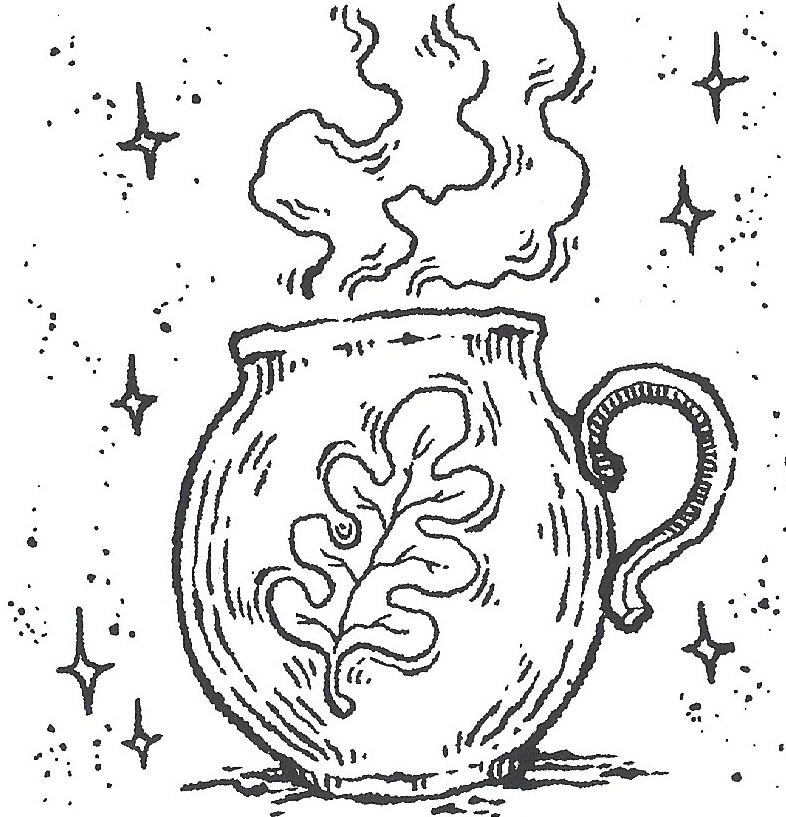
As is the case with creating gifts via fiber arts media, many handmade gifts are a great route to a more ecological gift as well and lend opportunities to use natural materials. Another good example is gifts made of pottery. Earthen clay transformed into an offering bowl, ritual chalice, or even a coffee cup not only makes a magical gilt for a special person, but it also offers a bit of extra grounding effect with the earth element connection of the pottery. If pottery Isn’t your forte, this is another opportunity to support a local or independent artisan. One of my favorite coffee cups is one my husband gifted me for my birthday, made by an independent artisan, that has the image from a real oak leaf imprinted onto the side and is glazed in lovely woodland greens. Something about a pottery mug crafted with care just makes the morning coffee taste that much better!
Personalized by Path
I’m also a fan of building interfaith bridges with practitioners of differing traditions. It’s a personal philosophy of mine that we are stronger working together and celebrating our similarities while respecting our differences. It certainly takes work for all involved but is well worth it. On that note, it can show a vast amount of goodwill to give a friend a gift that has resonance to their spiritual tradition.
One of the easiest and most universal ideas is that of handmade candles. Almost every tradition has some use for candles. Beeswax provides a clean and nicely burning natural material. I also find it smells lovely! As a Druid, I have a bit of an affection for the energetic connection to the magic and wisdom of the bees in a beeswax candle. Further, you might be able to obtain wax from a local beekeeper, which helps not only support the local economy but also local pollination! I once received a gift of a specially poured candle from a grove-mate, intended for me to use in my practice as a flamekeeper of Brigid’s Eternal Flame. Personal, practical, meaningful, and handmade! One year I also made beeswax votives for a number of my grove elders. For somebody who has everything, a candle is a consumable. They can use it and enjoy it, and it doesn’t take up permanent space.
A LITTLE BIT OF MAGIC
Visit local farmers markets to shop for gifts made by local artisans who often vend at these events!
When considering handmade gifts, the ability for customization should not be undervalued. As I’ve mentioned, the best gifts have personal meaning to the recipient. We have a multitude of opportunities for personalization with handmade items. A great option that also acknowledges the person’s spiritual tradition and uses simple natural materials is a wooden altar tile. Two common ways to execute this are painting it and wood burning it. I tend to do the pyrographic version myself (pyrography being a fancy term for woodburned art), but if painting is a forte of yours, by all means, work with your skill set! You’ll need to know a bit about the spiritual practices of and symbols that resonate with the person you are creating it for. If you are engaging in creating a handmade gift for someone, you likely know them well enough to already to have sufficient background information for ideas. However, it may not hurt to do a little clever research in advance in stealthy conversation. Remember, the design need not be complicated or elaborate in order to be beautiful, charming, and meaningful. A simple pentacle, Awen, ogham, rune, or other spiritual symbol is just fine, and you can feel free to embellish as much as you want from there.
Woodburned Pentacle
Il you’d like to give this particular idea a try, it’s quite easy. You will need to gather a few supplies to get started. A woodburning tool can be purchased at almost any craft supply store, but if you don’t have access to a shop locally, it can be found online. Woodburning tools get extremely hot, so please handle them with care and practice safety precautions. When the tool is heating, be sure to place it on its stand, on a heatproof surface. Unplug the tool when not in use and leave it on the heatproof surface until fully cooled. For children, I suggest forgoing the woodburning method and instead opting for paint, markers, or colored pencils. Safety first, always.
Found wood also works great for this project. If you have access to fallen tree limbs or trimmings from necessary pruning, you can cut off a disk with a saw. Using found wood can help forge an encigetic connection with the spirits of the land as well as reduce the pentacle’s carbon footprint, as the supplies didn’t have to travel far to reach their destination. Be sure to honor the spirit of the tree who bequeathed its limb to you! You will also want to make sure the wood is thoroughly dried out prior to cutting the disk and starting your creation process.
You will need:
Flectric woodburning tool
Wood disk (3 to 4 inches across works well)
Pencil with eraser
Sandpaper (optional)
Transfer paper (optional, sometimes called graphite paper)
Wood finish of your choice (optional)
If the wood disk’s surfaces happen to be exceptionally rough or show saw marks, begin by sanding it. It will depend how rough and how deep the saw marks are and how many grits of sandpaper you need to use. Use your best judgment.
The next step is to put your design onto the disk. If you are comfortable with freehanding it directly onto the disk with the pencil, then go ahead. I recommend drawing very lightly, so that anything that needs to be erased during the creation process can be done so easily. If, like me, you’re not especially confident drawing freehand directly, you can first draw onto a piece of printer paper, trace a design on tracing paper, or print a design you’ve laid out on your computer, and then use the transfer paper to transfer the design onto the wood. You simply sandwich the transfer paper between the wood and the paper with the design on it, and then trace over the design with the pencil. You’ll want to be sure to hold the disk and paper steady or securely tape things in place so that they do not shift during the process.
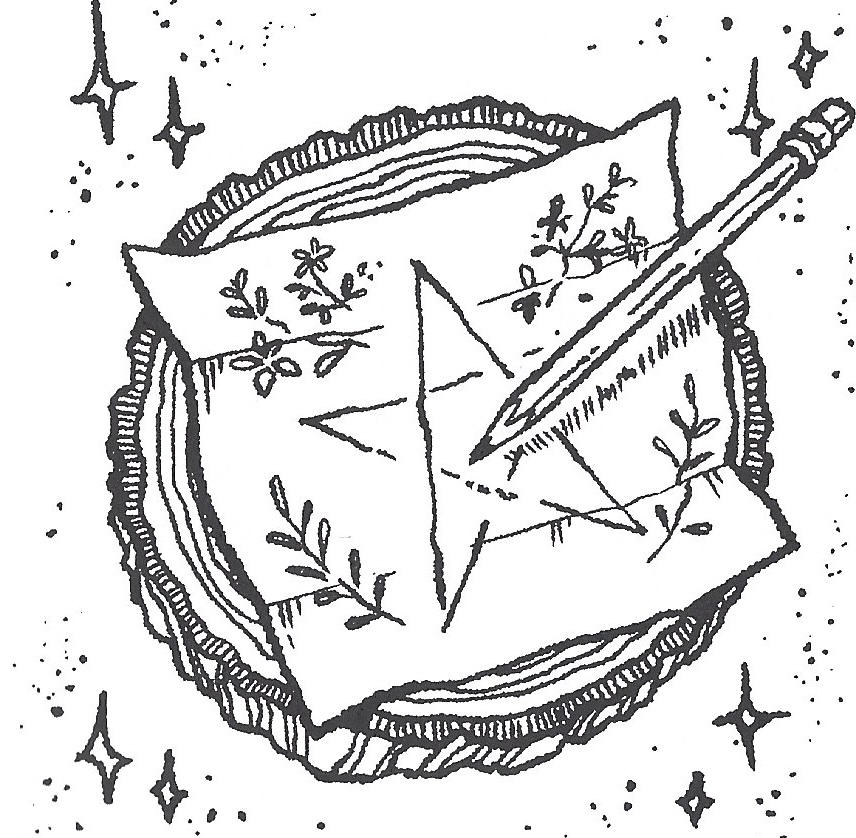
Once your design is on the wooden disk, it is time to burn it in. Simply go over the lines of the design carefully with the woodburning tool. I suggest practicing on some scrap wood first. It can take some adjustment to figure out how fast to move and hard to press to get the effect you desire. However, after just a short bit of practice, you’ll be ready. Once you have finished burning the design in, erase any of the light pencil markings that may still be visible.
You can leave it just as it is or put a natural finish on it at this point to help preserve, seal, and condition the wood. There are a number of natural finishes that are a mixture of beeswax and an oil such as tung or linseed. Do follow the instructions of the finish you choose, however. Most you simply wipe on and let soak in. Voilà, you’re finished!
Another inspiring twist on this craft that uses similar supplies comes from one of my fellow Druids. She was inspired by the mezuzahs from Jewish tradition. Mezuzahs are small decorated parchment scrolls that contain verses from the Torah and housed inside a small metal or wooden placard-like encasement. These are then nailed inside the doorframe or threshold to the home as a blessing and protective amulet. My friend adapted this by forgoing the scroll, using wood (trees being sacred to Druids), woodburning symbols sacred to Brigid (Celtic goddess of hearth and home) on the front and a prayer on the back, and affixing the small rectangular placard on the inside of the doorway to her home. I was honored to receive the second one she made as a token of our friendship.
Consider Consumables
When in doubt about what to make a person, as mentioned earlier, remember that consumables can be greatly appreciated. Mix a batch of handmade incense for that special mystical person in your life… I bet you have a few! Perhaps pair it with some of the aforementioned homemade candles. Also, it may sound cliché, but people really do loved baked goods. I’ve never seen a tin of cookies refused! Or you can offer to make them dinner in a busy time or time of need and drop off a casserole. Such a gift is twofold: they not only receive the meal but also the gift of the time they’d have spent having to prepare the meal on their own.
Speaking of time, are you short of it? Consider supporting a local coffee roaster for some locally roasted coffee to give that java-loving friend. For an extra luxurious gift, pair it with a locally made pottery mug and a card with a coffee blessing or incantation you wrote yourself.
The year is full of special days that we might commemorate with a gift. We need not abandon this ritual in order to avoid consumerism and to be in line with our ethics. The next time you feel called to the ritual of gift giving, consider the benefits of something handmade from the heart.