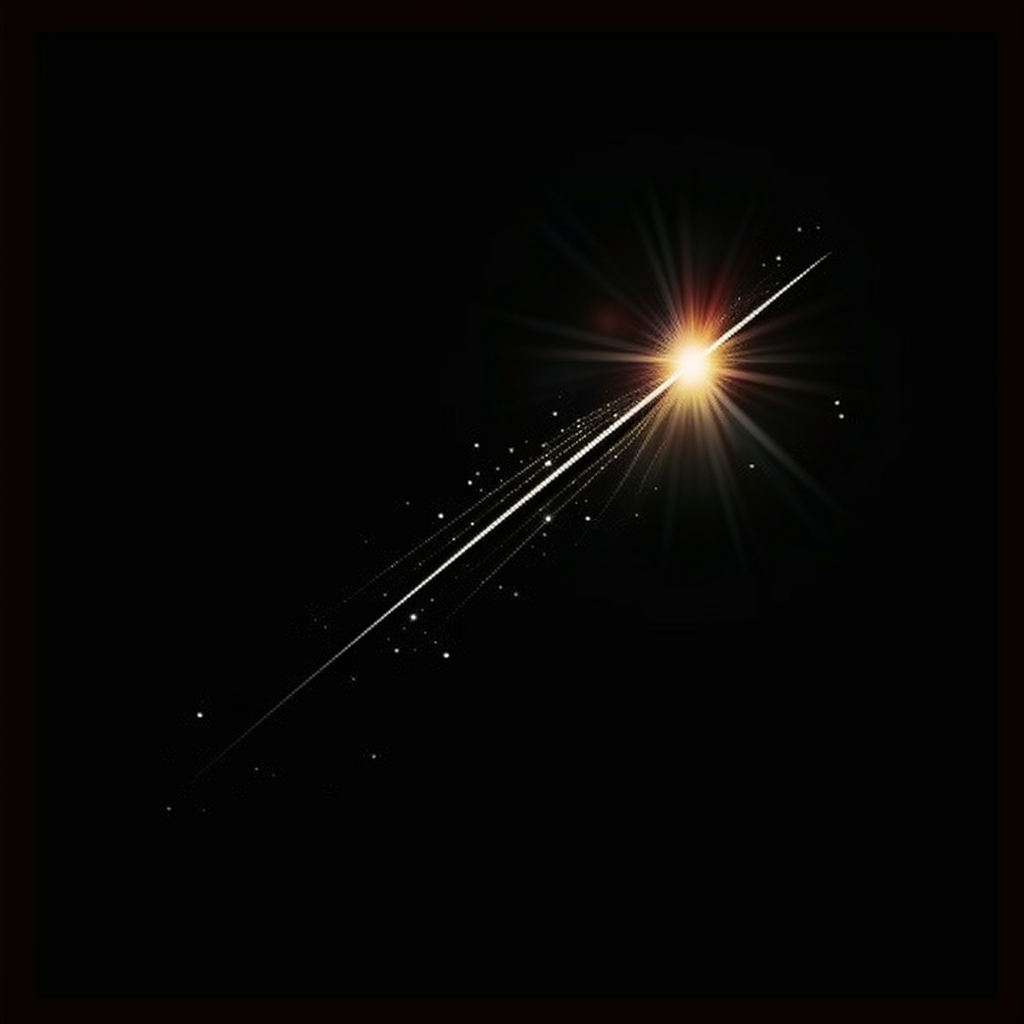
Delta Aquarids Meteor Shower
Friday, July 28, 2023
The Delta Aquarids meteor shower is an annual event that takes place in late July and early August. It is known for producing a decent number of meteors, but it is not as famous or intense as some of the other meteor showers throughout the year, like the Perseids in August or the Geminids in December.
The Delta Aquarids get their name from the constellation Aquarius, as the radiant point of the shower appears to originate near the star Delta Aquarii. The radiant point is the spot in the sky from which the meteors seem to emanate, but you can see the meteors streaking across various parts of the sky, not just near the radiant.
This meteor shower is caused by the Earth passing through the debris left behind by Comet 96P/Machholz. When the comet orbits the Sun, it sheds small particles of rock and dust, creating a trail of debris in its path. When the Earth’s orbit intersects with this trail, the debris enters our atmosphere, and as it burns up due to friction with the air, we observe the beautiful streaks of light known as meteors or “shooting stars.”
The Delta Aquarids meteor shower is visible from both the Northern and Southern Hemispheres. However, it tends to be more favorable for observers in the Southern Hemisphere, where the radiant point is higher in the sky. In the Northern Hemisphere, the meteors can still be observed, but the numbers may be somewhat lower, and the radiant will be lower on the horizon.
As with any meteor shower, the best way to observe the Delta Aquarids is to find a dark location away from city lights, lie back, and look up at the sky. No special equipment is needed; just your eyes and patience. Keep in mind that meteor showers can be somewhat unpredictable in terms of the number of meteors per hour, so it’s worth dedicating some time to increase your chances of catching a few shooting stars.
It’s always a good idea to check the specific dates and peak times for the Delta Aquarids meteor shower in the current year, as meteor shower peaks can vary slightly from year to year. Happy stargazing!
If you find this post helpful please consider my Amazon Wishlist, for Leo Season.