
Bastet, aka Bast
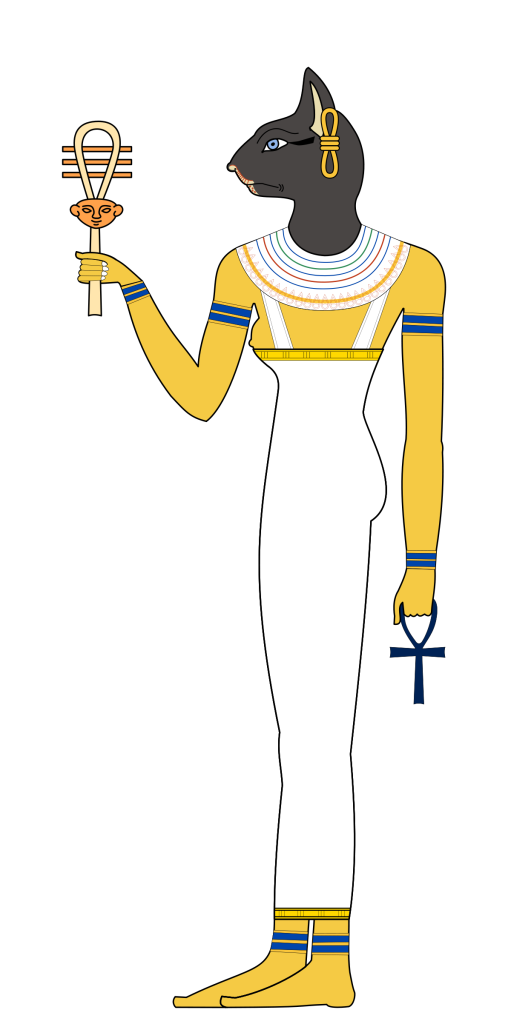
Bastet, also known as Bast, is an ancient Egyptian goddess who held significant importance in Egyptian mythology and religious beliefs. She was one of the more popular and widely venerated deities in ancient Egypt and had a diverse range of attributes and associations.
Key aspects of Bastet:
1. Appearance: Bastet was often depicted as a lioness or as a woman with the head of a lioness. In her lioness form, she was seen as a fierce and protective goddess.
2. Protector Goddess: One of Bastet’s primary roles was that of a protective deity. She was believed to be a guardian of the home, protecting it from evil spirits and malevolent forces. As a result, people often placed statues or amulets of Bastet in their households to ensure safety and security.
3. Fertility and Motherhood: Bastet was also associated with fertility and motherhood. Her nurturing and protective characteristics extended to her role in ensuring the well-being of families and children.
4. Sun Goddess: In some periods of ancient Egyptian history, Bastet was linked with the sun, and she was believed to have the power to bring about the sun’s warmth and light.
5. Celebrations: Festivals in honor of Bastet were an essential part of ancient Egyptian religious life. One of the most famous festivals was the “Feast of Bastet” celebrated annually in the city of Bubastis (modern-day Tell Basta) during the month of Bubastis. The festivities included music, dancing, and large processions where people would travel by boat to the temple of Bastet.
6. Relationships with Other Deities: Bastet was sometimes associated with other goddesses such as Sekhmet, the lioness-headed goddess of war and destruction. Some myths suggested that Bastet and Sekhmet were different aspects of the same goddess, with Bastet representing the gentle and protective qualities while Sekhmet represented the more aggressive and fierce aspects.
7. Evolution of Worship: Over time, the emphasis on Bastet’s characteristics shifted, and she gradually transformed from a lioness warrior goddess to a more domestic and nurturing figure, closely connected to fertility, music, dance, and joy.
It’s important to note that ancient Egyptian mythology and religion were complex and evolved over millennia, so interpretations and emphasis on deities could vary between different time periods and regions. Despite this, Bastet remained a beloved and enduring goddess throughout Egyptian history, leaving a lasting impact on the culture and religious practices of ancient Egypt.
If you find this post helpful please consider my Amazon Wishlist, for Leo Season.