
A Pagan Guide to Deep Ecology
Lupa
I was raised Roman Catholic, like one modern Pagans, though this didn’t stunt my love of nature. Once I became old enough for critical thinking, I started questioning things that didn’t make sense.
One of my quandaries was over Genesis 1:26 (KJV): “And God said, Let us make man in our image, after our likeness: and let them have dominion over the fish of the sea, and over the fowl of the air, and over the cattle, and over all the earth, and over every creeping thing that creepeth upon the earth.” It gave humanity blanket authority over every other living thing on this planet, and at a time when I was becoming increasingly aware of the environmental destruction we’ve wrought, it began putting cracks in my childhood faith.
With time, I began seeing how this attitude leaked out of the church and into the secular world. Capitalism’s laser focus on growing profits, for example, relies on increasing exploitation of finite resources, with no plans for the future. Any “natural resources” were measured in terms of dollar signs, not ecological value.
These avaricious messages of both religion and economy have so filtered into the mainstream American mindset that many people will argue that nature is there for the taking without ever thinking where that concept came from. While it’s understandable that we would prioritize our own species, we’re so self-centered that almost everything we’ve created has been done without considering the negative impact on the rest of the world.
Look at our energy and lighting needs for the past few centuries, for example. It’s pretty apparent that in order to extract fossil fuels from the ground you have to destroy an entire ecosystem surrounding the mining or drilling area. We hunted many whale species almost to the point of extinction for the lamp oil made from their blubber. Until relatively recently, very few people questioned the disastrous effects of these practices or seriously looked into better alternatives and solutions.
Why? Because our basic understanding of our place in the world that we’ve had imprinted in our brains from a young age shows humanity at the very top of a pyramid made up of every other living being. We here in the West are increasingly convinced that we are separate from the rest of nature and therefore can do whatever we want to it. Thankfully, there are antidotes to this ideological toxicity, and I’d like to present one of my favorites: deep ecology.
What Is Deep Ecology?
Imagine that image of a human being standing on top of that ecological pyramid. Now move everyone around until they’re all in a circle (and no, humans don’t have to be at the top or the center). That’s deep ecology in a nutshell. Rather than seeing our species as the pinnacle of evolution, ordained by the Divine to rule over all, deep ecology places us within a greater community of nature in which we are neither better nor worse than other living beings. We are the last remaining human ape, Homo sapiens, and our lineage back to the dawn of life is no longer or more important than the lineage of any other species surviving today.
This can be a difficult concept for a lot of people to accept. After all, if you’ve spent your entire life being reassured again and again of your inherent superiority, suddenly being presented with the idea that you are just one among many might be a bit of a shock. What’s important to remember is that you’re still special-it’s just that other beings are special in their own right.
That specialness can be termed the intrinsic value of a being, species, or ecosystem. Simply put, these entities are valuable just for existing and being a part of this world, regardless of what profit or convenience we can squeeze out of them. This flies in the face of capitalism’s focus on the extrinsic value of things: short-term profitability.
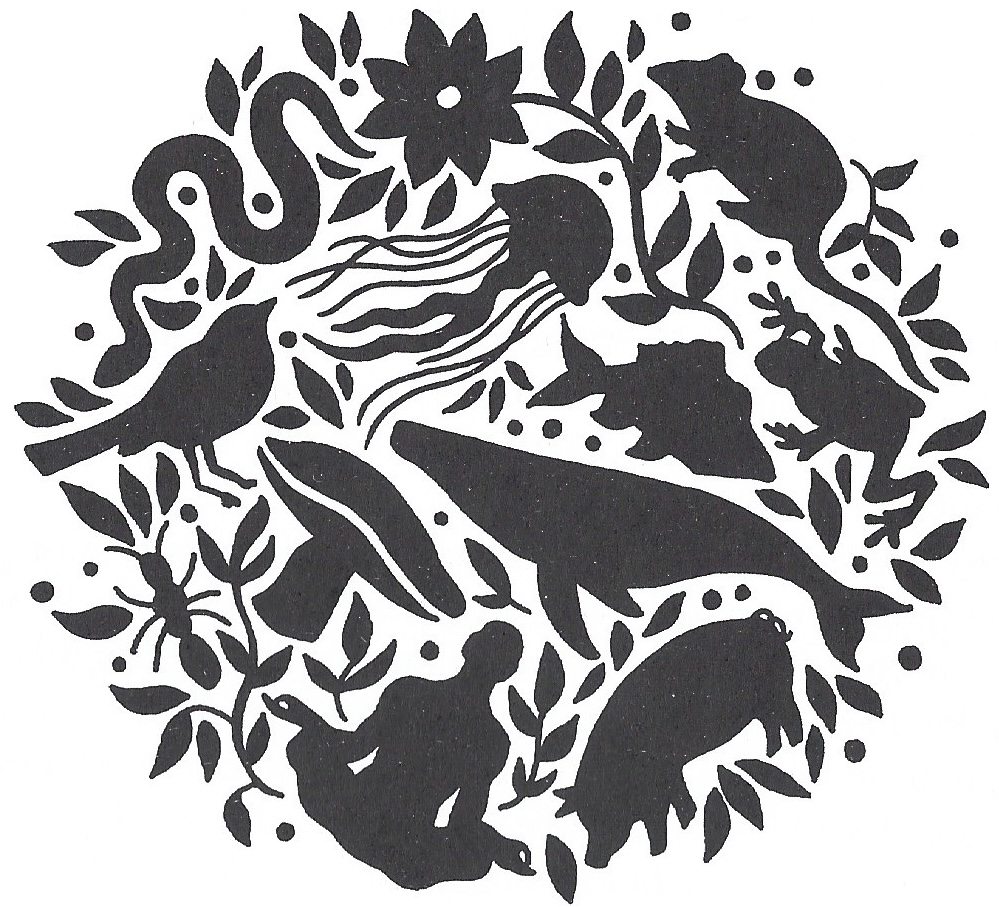
More importantly, deep ecology reminds us that every being is dependent on every other being in its ecosystem. It is the diversity of living beings that gives an ecosystem its strength. Each one fills a niche and evolves numerous interrelationships with others. The United States has a particular fondness for rugged individualism, yet this flies in the face of how cooperation helped us survive as a species for hundreds of thousands of years. No matter how alone and off-grid a person may be, they still rely on the clean water, food, and other resources gleaned from the land around them. Hence why so many cultures around the world emphasize gratitude toward nature.
No wonder deep ecology may seem like such a radical concept to those of us in self-centered societies. Yet it’s not so different from the worldview of many cultures around the world and throughout history. This doesn’t mean we should overly romanticize them, as is often done to Indigenous cultures in the Americas and beyond; after all, every group of humans has its flaws and errors. But at a time when the disasters perpetrated largely by industrialized nations threaten all living beings on Earth, perhaps a paradigm shift In exactly what we need to start turning this behemoth around.
Deep ecology is not without its flaws, of course. It is a very Eurocentric field that tends toward idealism. Its emphasis on “pure,” human-free wilderness is at odds with the reality that many protected wilderness areas saw their Indigenous human residents driven out by governmental entities, and that these Indigenous people often traditionally farmed or otherwise tended to the land even if it didn’t look like today’s intensive agricultural practices. And while “shallow ecology” may be entwined with the environmental destruction we face, the prospect of completely exchanging shallow for deep ideations isn’t realistic.
But with criticisms in mind, deep ecology still offers a lot of options for rethinking our relationship with the rest of nature and how our perception affects our choices and actions.
Changing Our Minds
In theory deep ecology should be very Pagan-friendly. After all, many of us base our practices in the natural world. Many of our symbols are drawn straight from the other living beings we share our world with, as well as the land, water, and air. Our deities usually have some aspect of nature that is strongly associated with them. Even the euphemisms used to describe modern Paganism in comparative religious discourse, like “earth religions” or “nature spirituality,” reflect that ecological link.
But most modern Pagans do come from a Western, acquisitive background when it comes to nature. Even when we profess to love it and care for it, many still behave within the framework that we can consume without guilt, whether overtly or unconsciously. Look how many of us drop a bunch of money on mass-produced plastic Halloween-themed “witchy décor” at big box stores every fall or fill our gardens with non-native magical herbs and other plants without thinking of the loss of habitat for local wildlife.
Now, these are examples of things we have control over. A lot of our impact on other living beings comes about simply because we have no other options. Few of us have the ability to disconnect ourselves from the massive systems that provide the bulk of the population with water, food, energy, and so on. Moreover, a lot of the discussion over personal carbon footprints and such are ways that the corporations and other entities most at fault for environmental destruction deflect the blame from themselves. That being said, societies are made of individuals, and the best person to start with when trying to spark change is yourself.
The first thing to do is to look at where we’ve neglected to consider other living beings and their habitats in our actions. Start with your local ecosystem; even in a city you still have to have access to water and air, and your actions almost certainly have an impact on those systems. How developed your area may be also significantly affects what living beings can no longer live there (and which ones have adapted enough to hang on). Try to spend a day taking note of how each choice or action you make affects your immediate ecosystem, including choices made as part of your spirituality. If you can identify specific beings that may be affected, so much the better.
Next, look at the wider-ranging impacts, like how much fuel was burned to bring you your food or to ship an item to you, adding carbon to the atmosphere that affects us all. You may have to do some digging to figure it out, but don’t knock yourself out trying to get every single last detail; sometimes you may just have to give it your best guess. Spend another day focusing on these global effects.
As you’re examining your choices, notice when you may think things like “We have to have this resource even though it destroys ecosystems” or “I really like this food even though I know it has these specific impacts on other living beings.” You don’t have to leap to a solution immediately; just use these moments as an opportunity to ask yourself how you came to feel that our consumption of these resources was justified. There’s a story behind the origin of every one of them that tells an anthropocentric (human-centered) narrative, and I just want you to pick that story apart to see how we got here. This exercise is only meant to increase your awareness of how shallow ecology permeates our lives and worldviews.
Also, please don’t beat yourself up over every little thing you feel you’re doing “wrong.” Keep in mind that we’re ensnared in massive systems that we’re dependent on, which generations of people spent centuries building up and which are largely kept in place by the various entities in power. This is just to break you out of your anthropocentric view of the world, and cultivate awareness of interconnectivity in a way that I find is more effective than “Now, imagine a glowing gold light connecting you to every other soul in the world.” That being said, if you’re feeling pretty cruddy and depressed about the state of the world and your part in it, you aren’t alone and it’s completely understandable. Try to approach this thoughtfulness with curiosity and concern rather than hopelessness; just by questioning your worldview, you are taking a step toward being part of the solution!
Taking Action
And now we get into what to do about all of this. Again, you can’t wave the whole world by yourself, but you can start with yourself.
Look at the actions and choices you make day to day, and think of what would need to be done differently in order to carry them out in a more ecologically mindful way that takes other beings into account. Some you won’t be able to do anything about, either because they’re out of your control (where your water comes from) or not financially viable (buying a house with solar power when you’re barely scraping by). Take note of those that you could realistically do something about.
If you’re feeling overwhelmed, pick just one of those choices that you could change, and think about what beings you’ll be helping by doing so, whether they’re in your immediate ecosystem or not. Maybe you’ll switch something in your diet to be more sustainable or purchase a spiritual item secondhand rather than brand new (yes, you can cleanse it, and it’ll be fine, I promise!). Perhaps instead of buying Halloween knickknacks this fall, you’ll instead donate the funds to a nonprofit working to protect endangered species and their habitats. Or you might put some space in your garden aside for a microhabitat made of native plants.
Whatever you do, let it be the symbolic start of moving through life in such a way that you extend your awareness to your entire community, not just the humans. Treat yourself as a constant work in progress; there will always be adjustments to be made as new information arises or your situation changes. Even if you can’t change your actions right now, just by cultivating that constant awareness of your impact, you increase the likelihood that you’ll make better, more ecologically sound decisions in the future when you have the opportunity.
If you find ways to help others shift their perspectives to ones more in line with deep ecology, so much the better! Don’t be a pushy proselytizer; instead, be available if people have questions, and lead by example, not command. Often by walking our talk we open the path for others to explore as well. Not everyone’s going to come to the same conclusions about what the best solution may be (just look at how much arguing there is about the most eco-friendly dietary choices!). What’s important is that people are really thinking about how to be more collaborative with the rest of our nature community and actively working toward solutions that take everyone into account, not just us humans. These individual changes and actions can add up over time, and often prompt larger, more collective efforts to create a better world.