
April 9
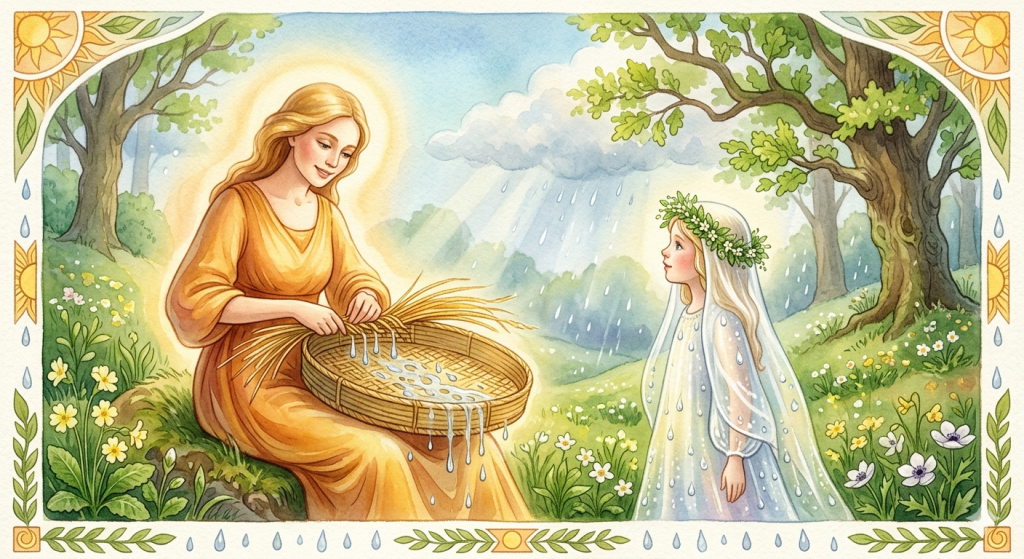
What is my goddess making?
Saule is plaiting a sieve, a basket
in which to sift the spring rain.
Look! Her little daughter is dressed
in a garment of dew. Her fair hair
is hidden beneath a white veil
and over the veil is a wreath
her mother wove of fresh leaves.
—Lithuanian folksong
With spring comes the rain that softens the hard earth so that tender seedlings can push through. For city dwellers today, rain seems a hardship, a reason for com-plaint. Yet what would our world be like without the rains— both gentle and torrential-that recirculate its waters?
In this old Baltic folksong, the connection between the sun, whom we praise for her warmth and brightness, and the driving cold rain is made clear. Science tells us that the sun’s warmth draws up the ocean’s water, forming it into clouds that then rain forth upon the land. The song expresses this truth poetically, showing the goddess decking her child in cloud-white veils and covering her with moisture. Spring rains may demand an umbrella, but we should celebrate their coming as a signal of the goddess’ love and concern for us.
To purchase a copy of the book, I recommend this trusted site; https://a.co/d/bGfVO8a