Lammas
The First Harvest
Sabbat Names: Lammas or Lughnasasdh (also spelled Lughnassa, Lughnassadh, and Lughnasa; also called First Fruits and First Harvest)
Date: July 31, August 1, August 2
Pronunciation: Lammas = “LAH-Muss,” Lughnasadh = “Loo-NAH-sah”
Lammas (or Lughnasadh) is probably the most curious of all the sabbats, given it many names. Lughnasadh is an ancient Irish-Celtic holiday, just like Imbolc, Beltane, and Samhain. It was originally celebrated beginning at sundown on July 31 with festivities carrying on into the following day. Because most of us don’t start our days at sunset, the majority of Witches celebrate the holiday on August 1.
Lammas is the name of an Anglo-Saxon holiday also celebrated at the start of August. It could be a borrowing of the Irish-Celtic Lughnasadh, or it might have arisen independently. Lammas later became the name of a holiday in the Catholic Church, where it was also known by the name loaf mass, and was a celebration of the grain harvest and the bread that went along with it. Lammas was generally celebrated on August 1, though some Witches use the date of August 2, which comes from The White Goddess (1948) by Robert Graves. Some Witches, such as author Silver RavenWolf, differentiate between the two sabbats, with Silver giving the date of Lammas as August 2 and Lughnasadh as August 7.
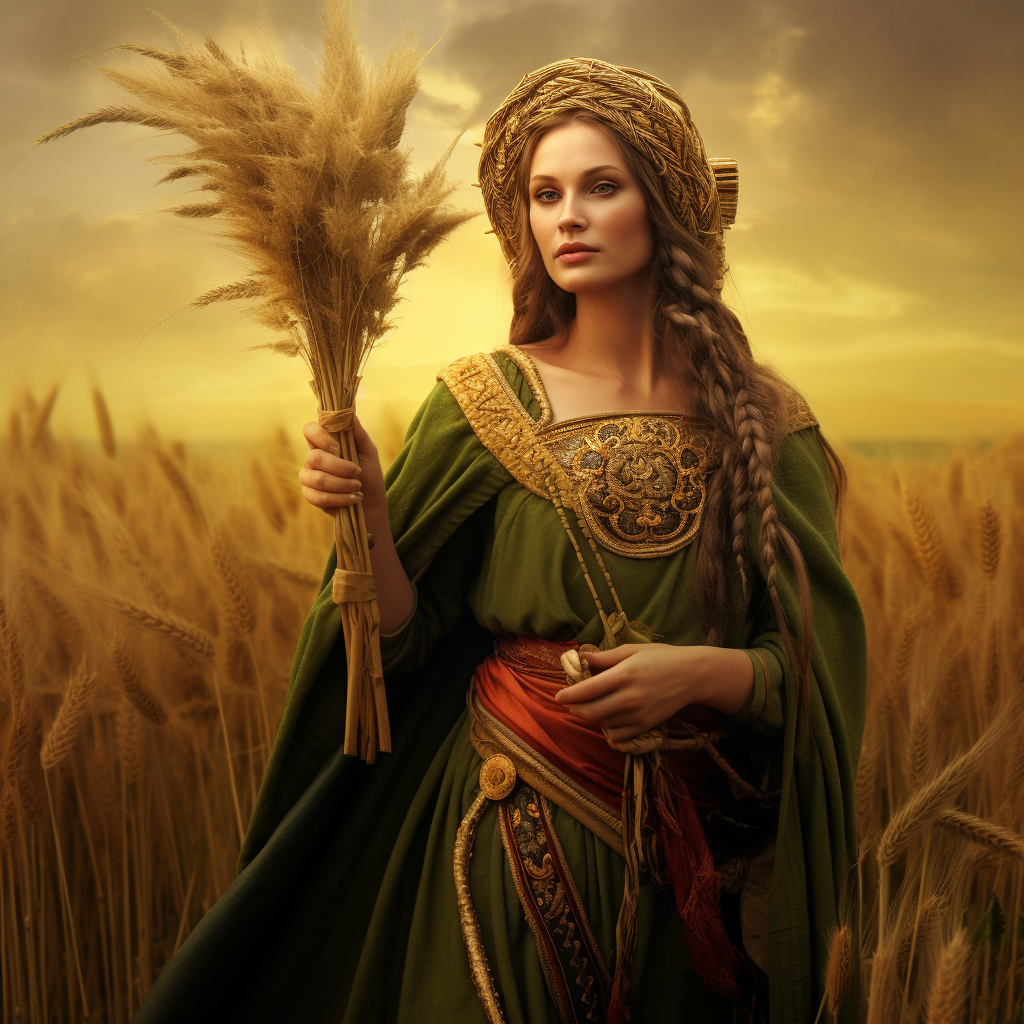
No matter what it’s called or when it’s celebrated, Lammas is undoubtedly a harvest festival. In Ireland and Scotland, it marks the beginning of the cereal grain harvest, which has always been a cause for celebration. Must Modern Witches celebrate it in this fashion too, regardless of where they live. Though I’ve never lived in an area where the majority of grain is gathered in early August, many of the Lammas rituals I’ve participated in over the years have involved bread.
Irish mythology doesn’t have much to say about Lughnasadh as a harvest festival, but a clue to that part of its history can be found in an alternative name once used to describe the holiday. In medieval times, Lammas was also called the Gule of August, with many people believing that this meant that Lammas was the “Yule” of August. A more likely explanation is that this alternative name comes from gwyl aust, the Welsh name for August 1. The Welsh word gwyl translates as “feast,” meaning Lammas and Lughnasadh celebrations were “feasts of August.
Lughnasadh is often connected to the God Lugh. They share a name after all, and for many Witches he is a central figure in their holiday celebrations. Lugh is seen by many as a solar deity, but the Irish Celtic Lughnasadh was never a fire festival in the way that Beltane and Samhain were. This again makes it a bit odd when compared to the other greater sabbats.
In the medieval period, the celebration of Lammas coincided with the payment of rent, local elections, fairs, and the opening of public lands. Echoes of this practice can still be seen throughout North America and the British Isles in the tradition of August state and county fairs. Nearly every city I’ve ever lived in has had some sort of August fair, and many of them revolve around agriculture (and those carnival rides that always go around in circles usually make me ill.)
For many Witches, the heat of August and the various vacations that many of us take with our friends and loved ones make Lammas a challenging sabbat to celebrate. If my coven is going to miss a sabbat, it’s generally Lammas, and that’s a shame. It’s an important spoke on the Wheel of the Year, and while it doesn’t mark the start of autumn for many of us in the Northern Hemisphere, it does signify that seasonal change is coming.
If you find this post helpful please consider my Amazon Wishlist, for Leo Season.