Margaret Murray’s Birthday
Thursday, July 13, 2023
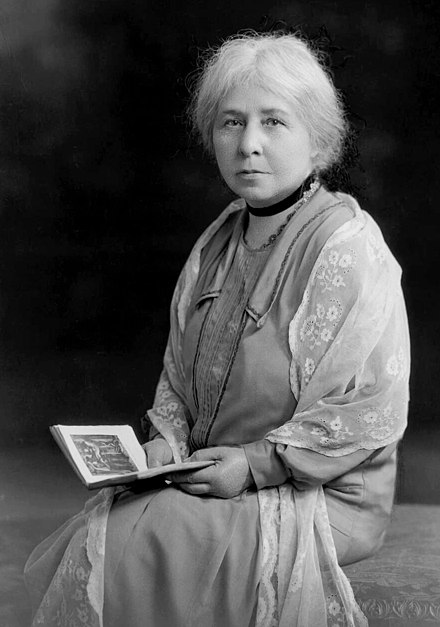
Margaret Alice Murray (1863-1963) was a prominent British archaeologist, Egyptologist, and folklorist. She is best known for her pioneering work in the field of Egyptology and her controversial theories about the origins of witchcraft and the witch trials.
Murray was born on July 13, 1863, in Calcutta, British India (now Kolkata, India), to a wealthy English family. She developed an early interest in archaeology and ancient civilizations. After completing her education in England, she became involved in the field of Egyptology.
In the early 20th century, Murray gained recognition for her excavations and research in Egypt. She was one of the first female Egyptologists and made significant contributions to the understanding of ancient Egyptian religious practices and the cult of the god Osiris. Her research and expertise led to her appointment as the first female lecturer in archaeology in the United Kingdom at University College London (UCL) in 1898.
However, it was Murray’s work on witchcraft and the witch trials that brought her both acclaim and controversy. In her influential book “The Witch-Cult in Western Europe” (1921), she proposed that witchcraft was an ancient, pre-Christian religion that had survived underground and resurfaced during the European witch trials of the 16th and 17th centuries. Murray argued that those accused of witchcraft were actually practitioners of a pagan fertility cult. Her theory, known as the “Witch-Cult hypothesis,” sparked intense debate among scholars and historians.
Despite the controversy surrounding her theories, Murray’s work had a lasting impact on the study of witchcraft and paganism. She was a prominent figure in the early development of Wicca, a modern religious movement influenced by ancient pagan beliefs. Some of her ideas about witchcraft and pagan practices were incorporated into the rituals and beliefs of Wicca.
In addition to her archaeological and folkloric research, Murray was an active member of various academic societies, including the Folklore Society and the Society of Antiquaries. She wrote numerous books and articles on Egyptology, folklore, and witchcraft throughout her career.
Margaret Murray’s legacy is complex, with her contributions to Egyptology widely acknowledged, while her theories on witchcraft remain highly debated. Her pioneering work as a female archaeologist and her exploration of marginalized religious practices have made her an important figure in the history of both academic disciplines and modern spirituality.
If you find this post helpful please consider my Amazon Wishlist, for Cancer Season.